
News · Floor care
Cleaning robots and scrubber dryers: why some sites need both
An autonomous robot and an operator-controlled scrubber dryer do different jobs. The useful question is how to divide the work, not which machine wins.
By ERA Robotics ·
 View the original post on LinkedIn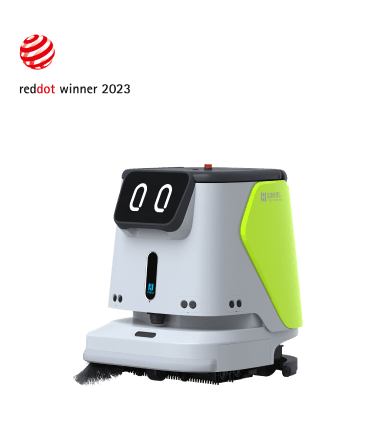
Should a cleaning team choose a robot or a scrubber dryer? A better starting point is to ask which tasks need to be completed, and how much direct control each task requires.
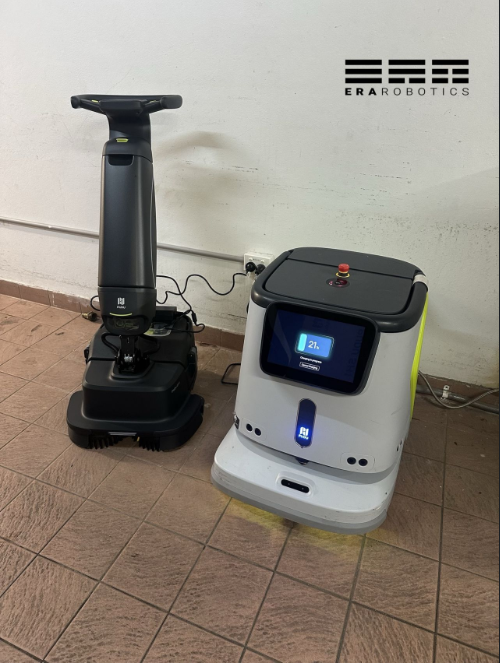
An example shared in an ERA Robotics LinkedIn post illustrates this approach. A hotel was already using a PUDU CC1 for vacuuming. Its marble-floor cleaning still involved manual work, so the team added an SH1 for scrubbing. The arrangement gave each machine a defined role within the site's cleaning routine.
The important lesson is not that every hotel needs two machines. It is that equipment should be selected around the work.
The CC1 and SH1 are not the same type of equipment
The PUDU CC1 is an autonomous commercial cleaning robot with sweeping, scrubbing, vacuuming and mopping functions. A site assessment and suitable configuration are still needed to determine how those functions should be used.
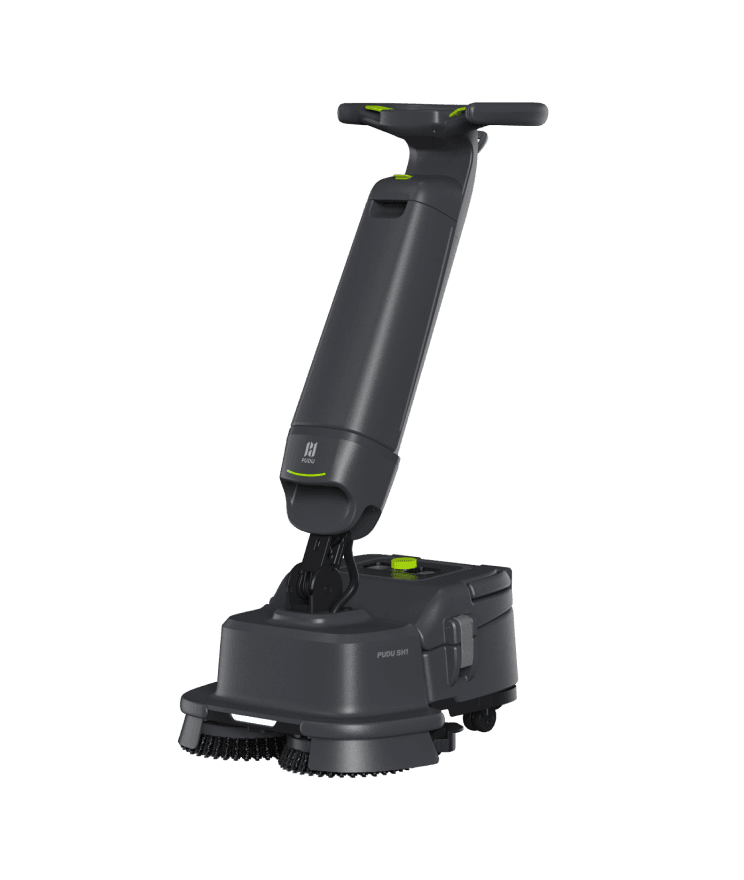
The PUDU SH1 is an operator-controlled, walk-behind scrubber dryer. A person guides the machine while it scrubs and collects dirty water. It should not be described as a second autonomous robot.
That distinction matters when planning labour and coverage. Time spent operating an SH1 remains staff time, even when it changes how a task is performed.
Divide the work by task
In the hotel example, the CC1 was assigned vacuuming and the SH1 was added for marble-floor scrubbing. That was the selected workflow for that site, not a limitation of the CC1's full range of cleaning functions.
For another building, the division could be different. Begin with the areas that need cleaning, the required method and the frequency. Then decide which tasks are suitable for autonomous operation and which benefit from an operator being directly in control.
Keep detail cleaning, unexpected spills, restricted areas and quality checks in the plan. Do not leave them unassigned simply because new equipment has arrived.
Assess specialist floor finishes carefully
The material and condition of a floor should shape the cleaning method. Before using a machine on stone or another specialist finish, confirm the appropriate brush or pad, cleaning solution and operating method with the relevant supplier or floor-care guidance.
Test a suitable area before extending the routine. The objective is the right result for that surface, not simply completing a pass with a new machine.
Measure the combined workflow
Compare the complete routine before and after any change. Include preparation, operating time, attention to the robot, emptying or refilling equipment, daily care and the final quality check.
Track what staff actually do with any time released. A useful outcome might be more attention to detail cleaning, more consistent completion of scheduled tasks or less disruption to another part of the operation. These should be evaluated at the site, not assumed from the equipment list.
Choose a combination only when it earns its place
Some sites may need an autonomous robot, some an operator-controlled scrubber dryer, and some both. Avoid adding equipment without a clear task, trained operator or practical storage and care arrangement.
For related reading, see the hotel example post on LinkedIn and more of ERA Robotics' LinkedIn updates .
Reviewing your floor-cleaning setup?
Talk to ERA Robotics about one existing cleaning routine. We can assess whether a CC1, an SH1 or another approach is appropriate. Explore the broader cleaning robot range.